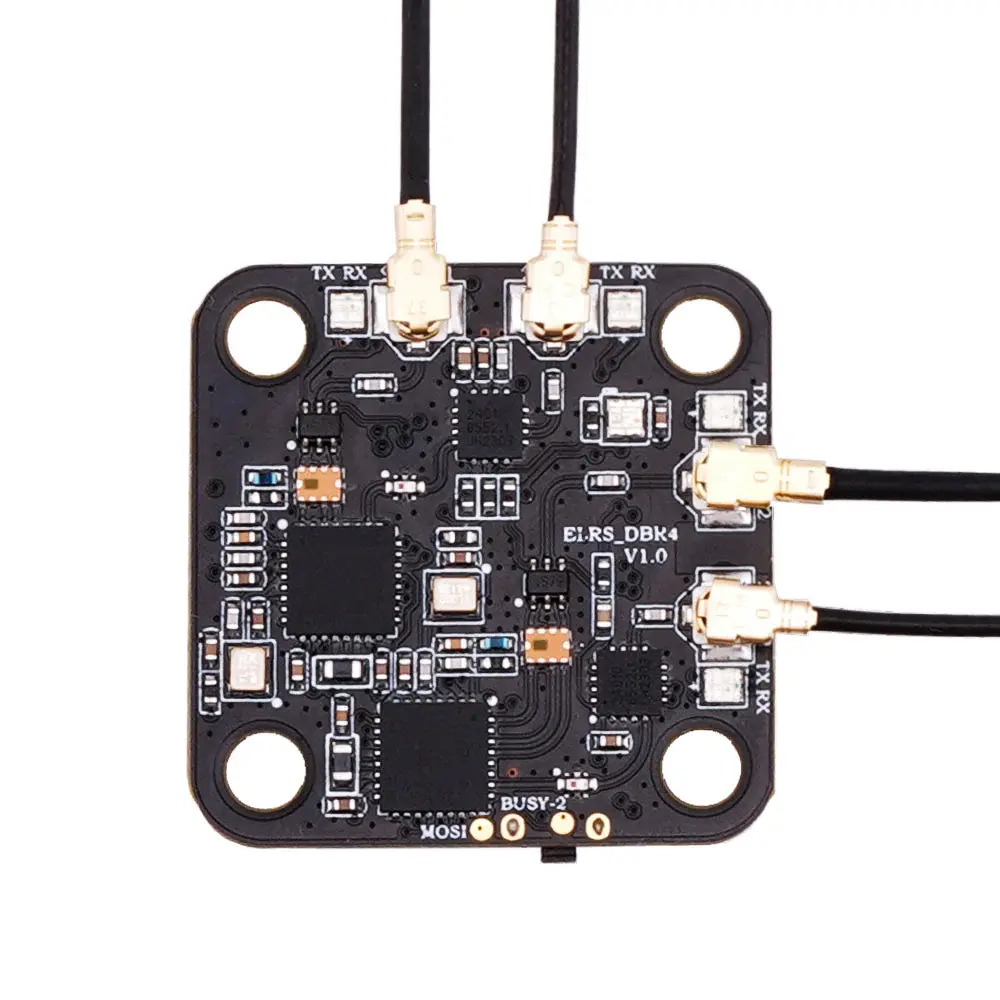
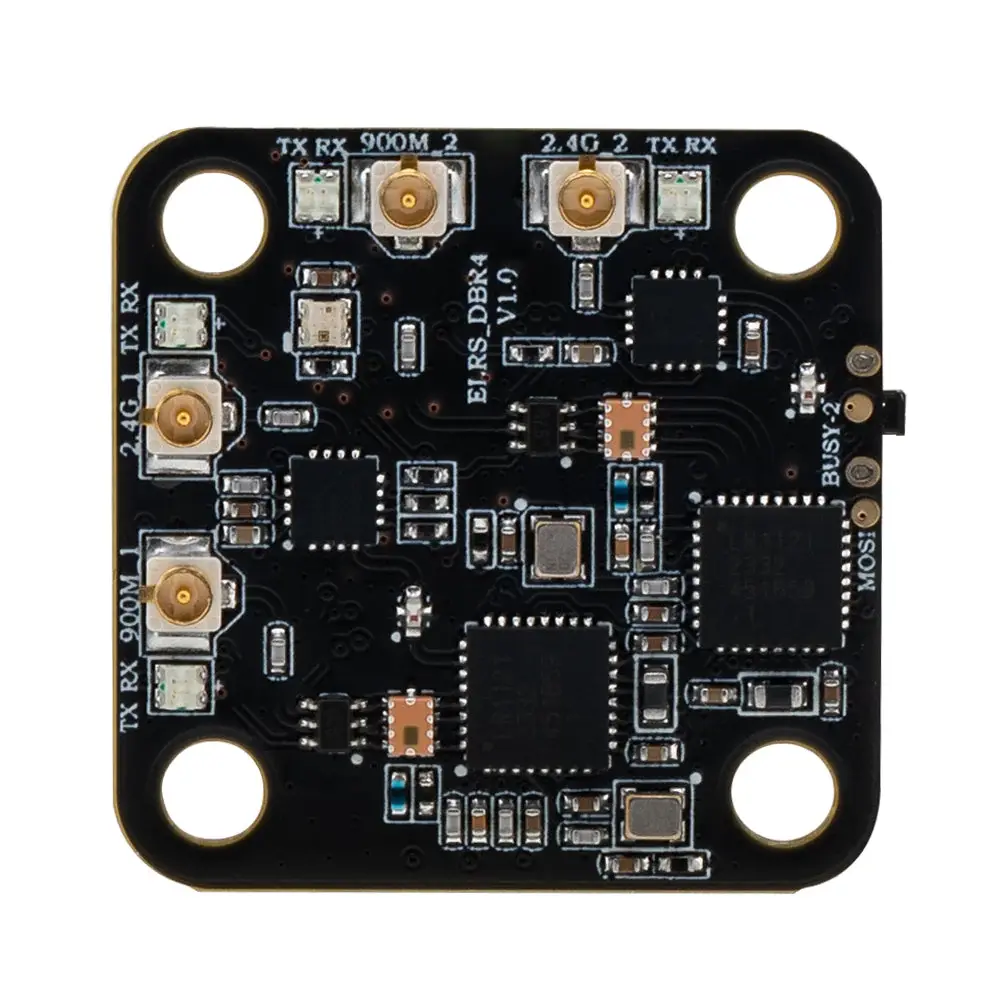
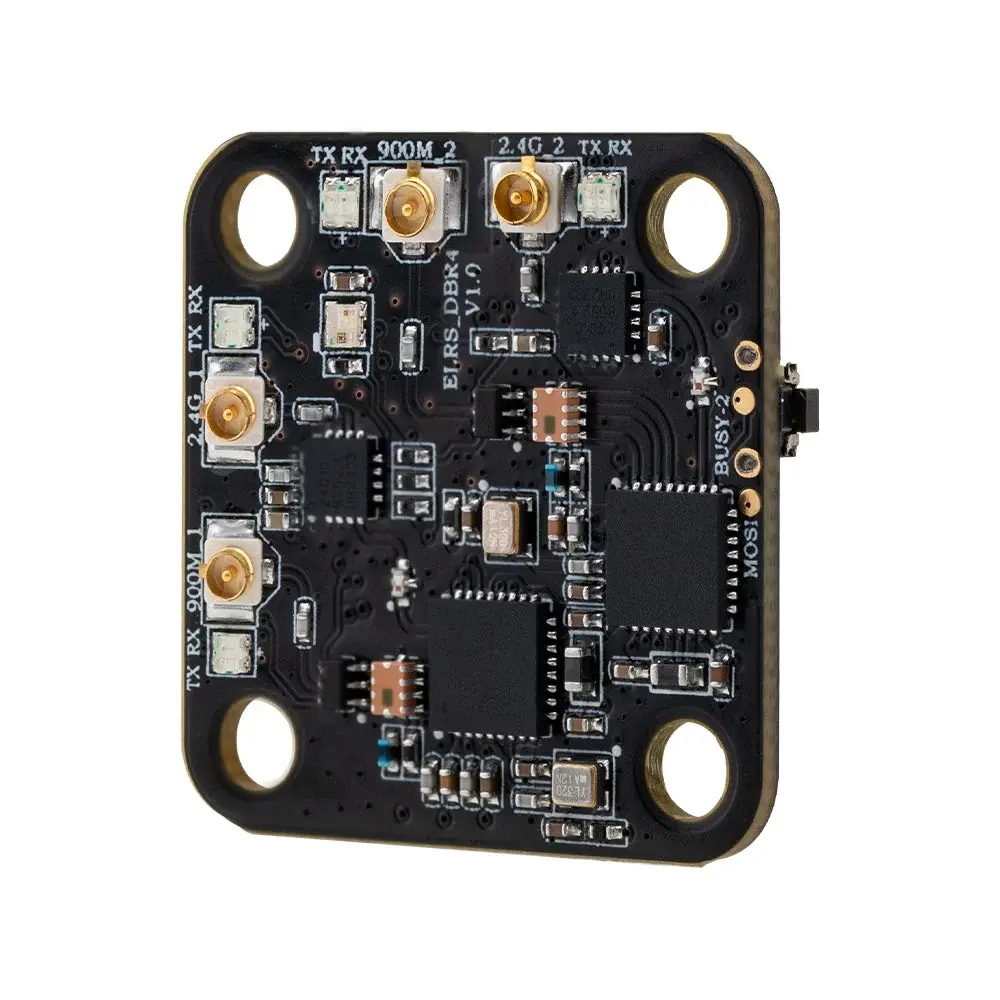
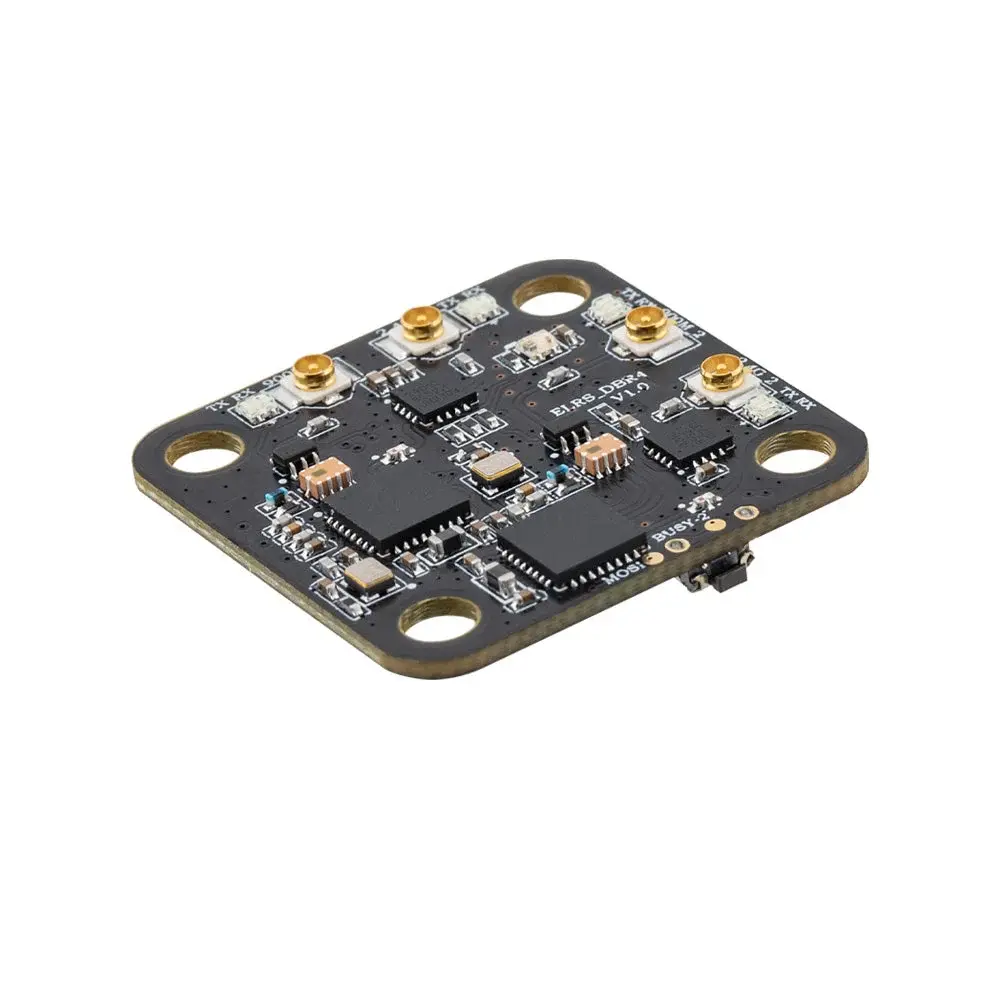
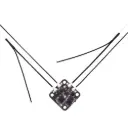

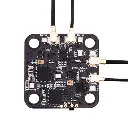
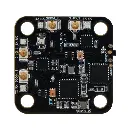
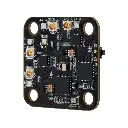
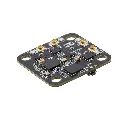
RadioMaster DBR4 Dual Band Xross Gemini ExpressLRS Receiver
RadioMaster DBR4 Dual Band Xross Gemini ExpressLRS Receiver – Two Bands, Two Data Streams, One Receiver
DBR4 uses two dual-band RF sections capable of simultaneously receiving 2.4 GHz and 900 MHz signals. This allows two data streams to be received at the same time, increasing resistance to interference and reducing the risk of packet loss. Four separate antennas provide greater freedom when planning the RF installation, while support for Gemini 2.4 GHz, Gemini Sub-GHz and Xrossband GemX makes the receiver particularly flexible when paired with a compatible ExpressLRS transmitter system such as RadioMaster Nomad.
RadioMaster DBR4 Dual Band Xross Gemini ExpressLRS Receiver Key Features
- Dual-band ExpressLRS architecture – two RF sections support simultaneous reception in the 2.4 GHz and 900 MHz bands.
- Dual-channel Gemini reception – enables simultaneous reception of two data streams for greater link resilience.
- Two Semtech LR1121 transceivers – the RF section is based on two third-generation LR1121 chips.
- Gemini 2.4 GHz support – allows Gemini operation within the 2.4 GHz band.
- Gemini Sub-GHz support – provides Gemini operation in the lower-frequency band.
- Xrossband GemX support – combines 2.4 GHz and Sub-GHz operation within a compatible ExpressLRS configuration.
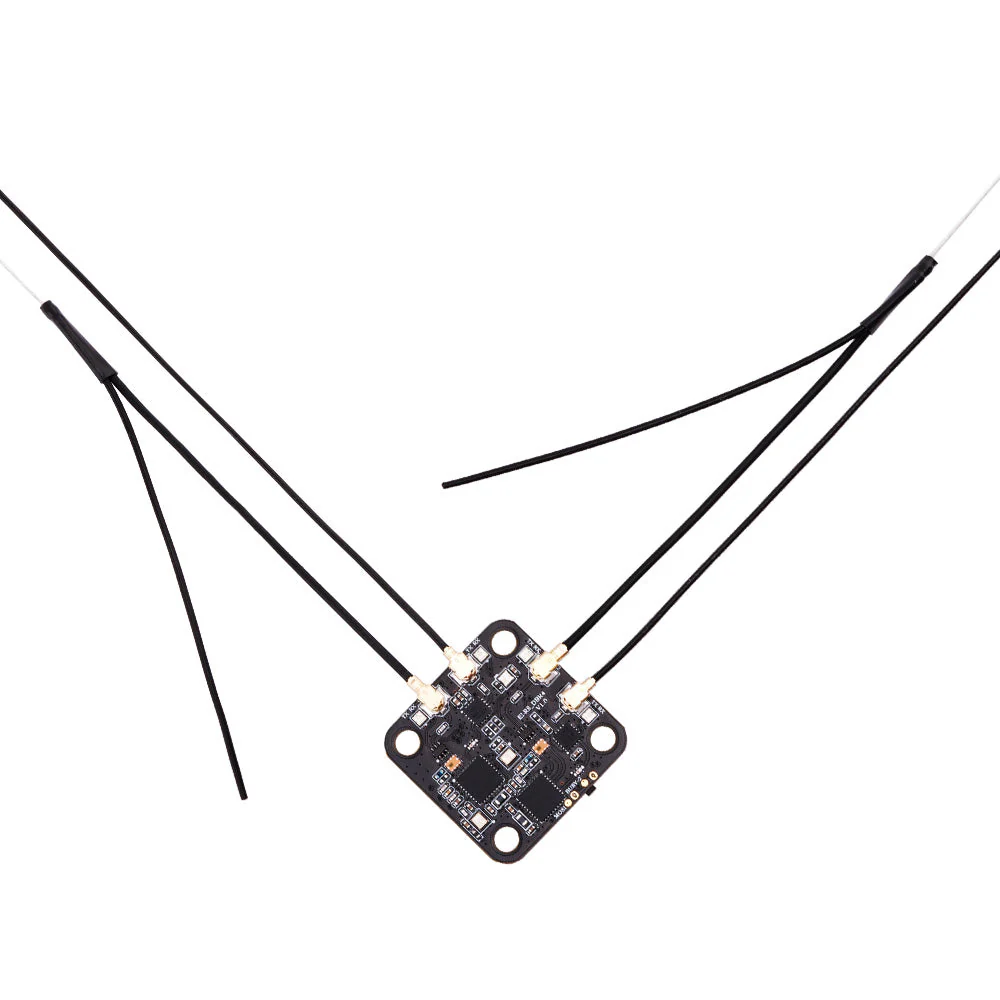
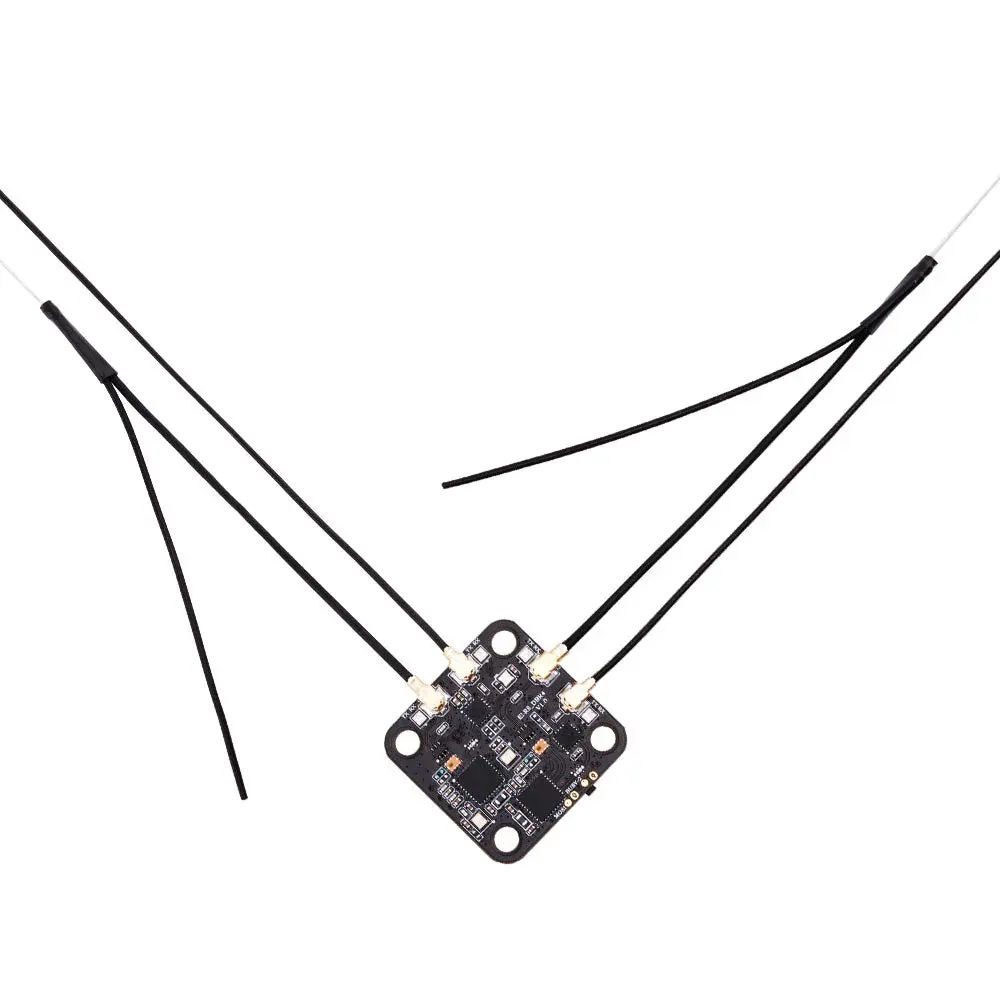
- Four separate antennas – two 2.4 GHz antennas and two 900 MHz antennas provide greater freedom when planning antenna placement.
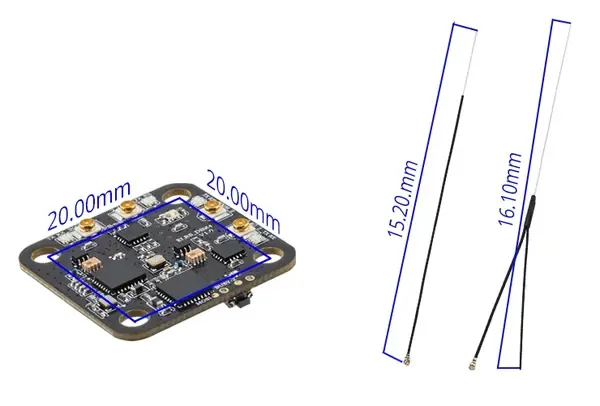
- 20 x 20 mm mounting pattern – convenient for integration with compatible electronics stacks or direct mounting to a frame.
- CRSF interface – provides serial communication with compatible flight controllers and other devices.
- Designed for the RadioMaster Nomad ecosystem – RadioMaster positions the DBR4 as a companion receiver for its Gemini Xrossband system.
RadioMaster DBR4 Dual Band Xross Gemini ExpressLRS Receiver
Two Bands Working Together
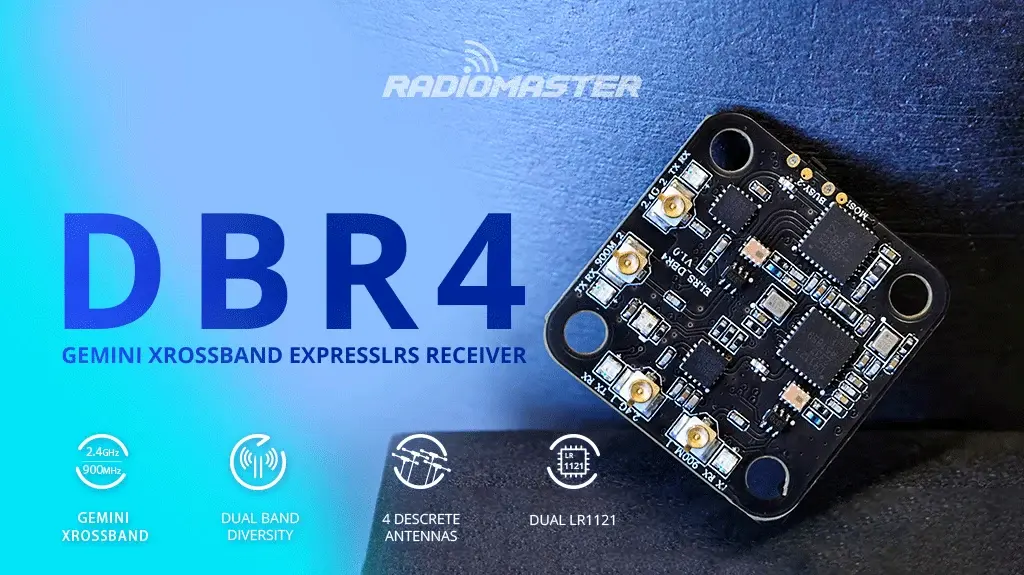
DBR4 goes beyond simply offering a choice between two frequency bands. Its dual-band RF architecture allows 2.4 GHz and 900 MHz to work together in Xrossband GemX mode, enabling simultaneous reception of two data streams. This adds another layer of RF diversity and helps maintain a more robust control link in environments where interference or signal obstruction may become a concern.
Two LR1121 Transceivers at the Heart of the RF System
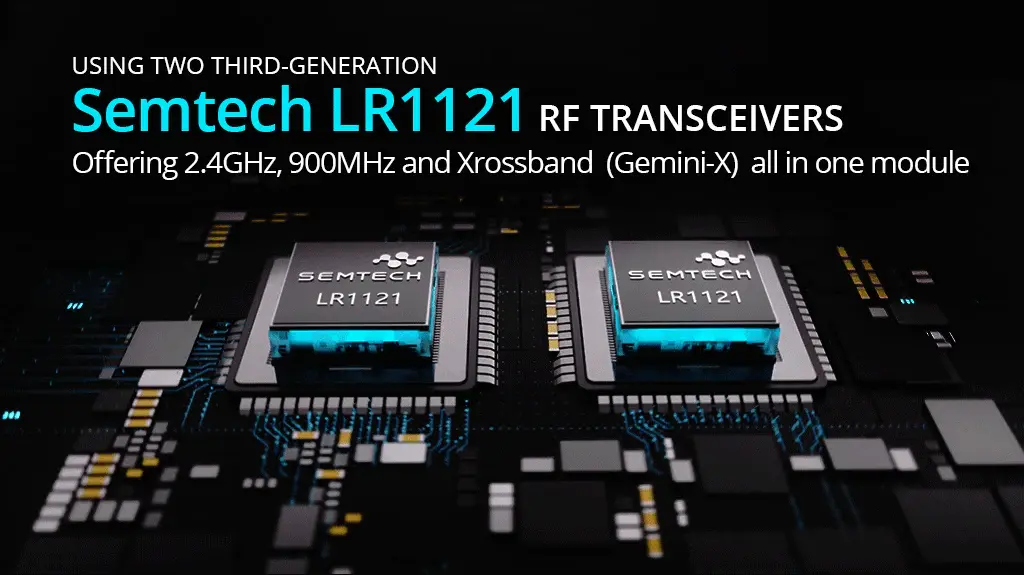
Two Semtech LR1121 transceivers form the core of the DBR4 radio section. The architecture supports both 2.4 GHz and Sub-GHz operation, allowing the receiver to work with Gemini modes within a single frequency range as well as Xrossband GemX, which combines the two bands within one compatible ExpressLRS system.
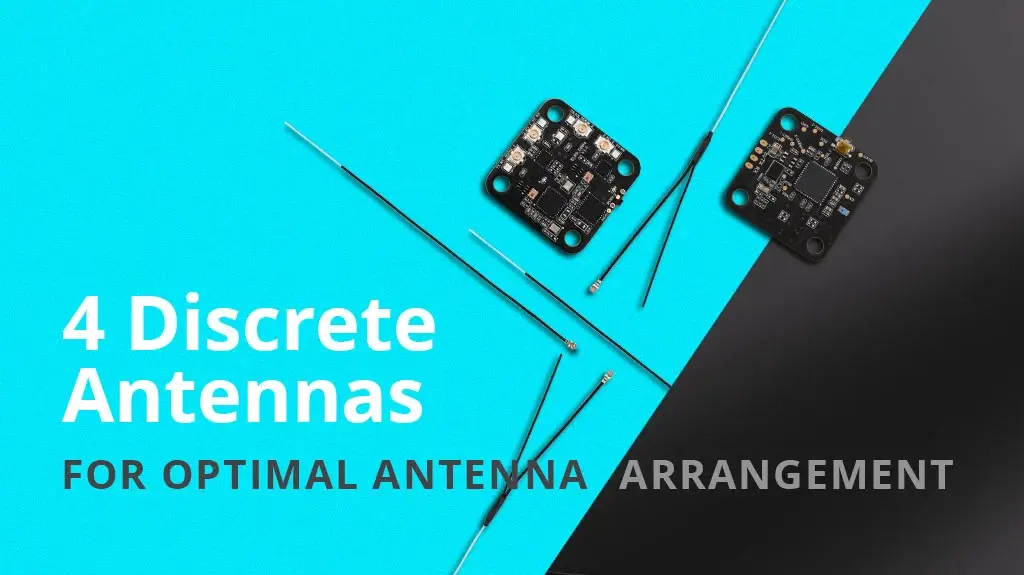
Four Antennas, More Freedom in RF Installation
DBR4 uses four separate antennas: two for 2.4 GHz and two for 900 MHz. This gives the integrator greater freedom when choosing their position and orientation inside a drone, UAV or fixed-wing aircraft. In larger or more complex builds, the RF installation can therefore be planned as part of the complete system rather than forcing all antennas into a single location.
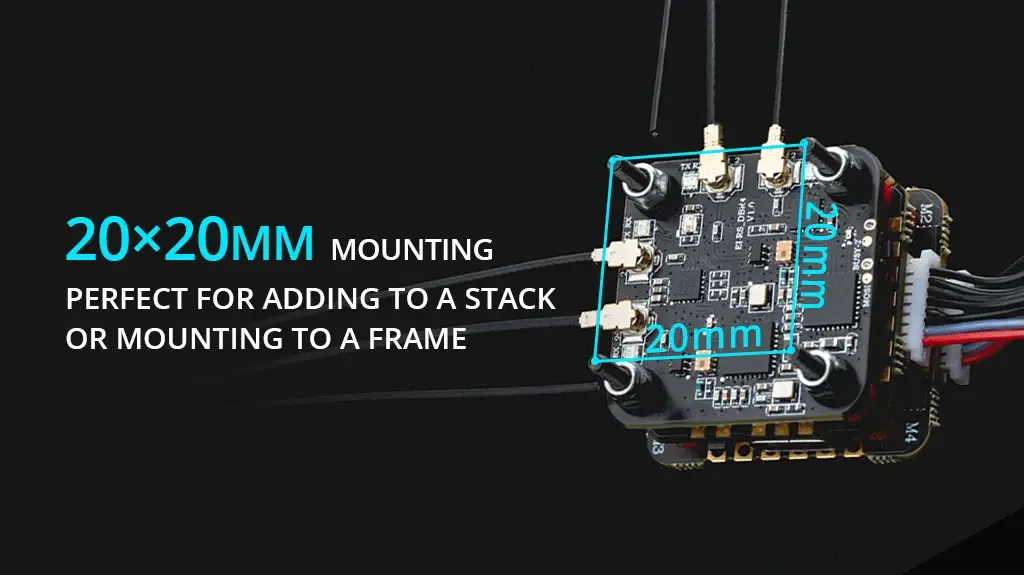
Easy Integration with a 20 x 20 mm Mounting Pattern
The 20 x 20 mm mounting-hole pattern makes the DBR4 convenient to integrate with compatible electronics stacks or mount directly to a frame. A defined mounting position helps keep the receiver secure and makes it easier to organise the flight controller, wiring and other onboard electronics around the RF system.

Built with High-Rate Data Links in Mind
RadioMaster develops the DBR4 platform with higher-rate Sub-GHz communication and data-intensive applications such as MAVLink in mind. The manufacturer's newer ExpressLRS packet modes are aimed at increasing data throughput while maintaining a robust radio link.
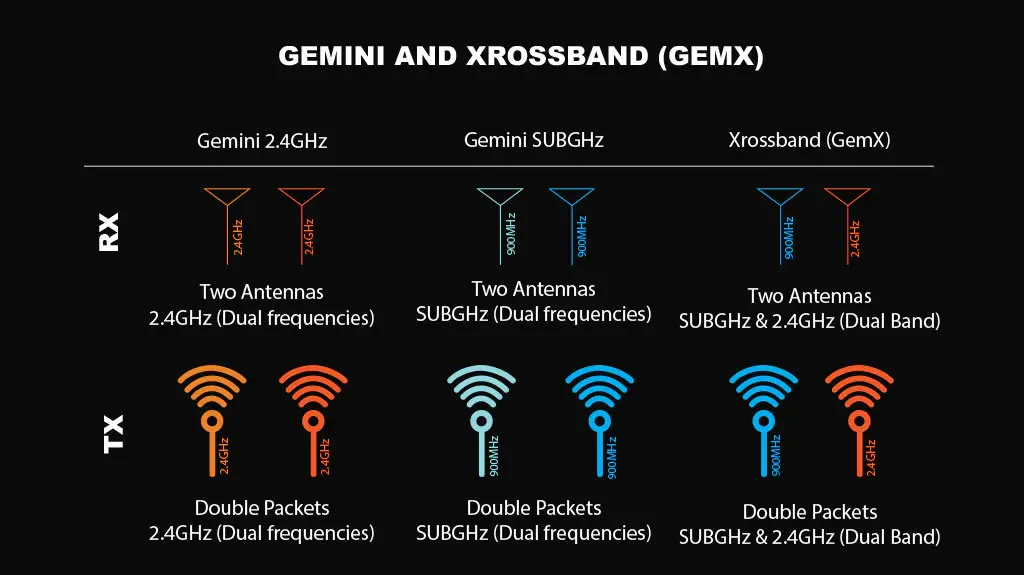
Gemini or Xrossband – Choose How the RF Link Works
The dual RF architecture can be used in several ways. Gemini 2.4 GHz uses two transmissions within the 2.4 GHz band, Gemini Sub-GHz provides dual-channel operation in the lower-frequency range, while Xrossband GemX combines Sub-GHz and 2.4 GHz. This allows the operating mode to be selected according to the capabilities of the transmitter system and the requirements of the build.
WARNING
RadioMaster DBR4 Dual Band Xross Gemini ExpressLRS Receiver Important Information Before Purchase
RadioMaster DBR4 Dual Band Xross Gemini ExpressLRS Receiver is offered in the FCC version. The manufacturer's specification identifies the type as ISM_2.4, FCC_915 and lists frequency ranges of 2.404–2.479 GHz and 903.5–926.9 MHz. The selected operating configuration must comply with the radio-frequency regulations applicable in the country where the system is used.
Using Gemini and Xrossband functions requires a compatible and correctly configured ExpressLRS transmitter system. RadioMaster specifically positions the DBR4 as a companion to the Nomad module, but this does not mean that every ExpressLRS transmitter automatically supports all DBR4 operating modes.
The current RadioMaster product page contains an internal discrepancy regarding telemetry RF power. The Features section states Max 2x 100 mW, while the Specification section states Max 100 mW. Because the technical specification below is based exclusively on the manufacturer's Specification section, the value Max 100 mW is retained.
The manufacturer's page also contains different roadmap references for 1000 Hz operation. The Specification section mentions 1000 Hz in connection with ExpressLRS V3.4, while the newer packet-rate information refers to K1000 in ExpressLRS V3.5. For this reason, the specification below retains the confirmed current maximum receive refresh rate of 500 Hz.
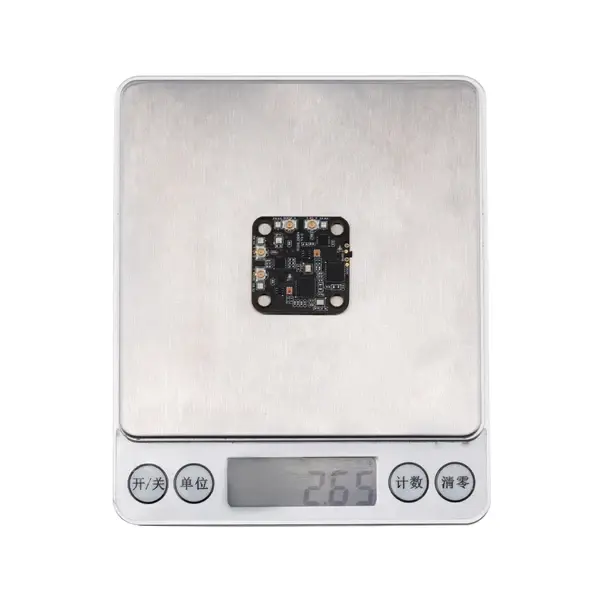
RadioMaster DBR4 Dual Band Xross Gemini ExpressLRS Receiver Low Weight for Easier Integration
Despite its dual-band architecture, two RF transceivers and four-antenna system, the receiver itself remains lightweight. According to the official RadioMaster specification, the DBR4 weighs 2.70 g without antennas and 5.30 g with antennas. This helps limit the impact of the radio system on the total mass of the aircraft.
RadioMaster DBR4 Dual Band Xross Gemini ExpressLRS Receiver Dimensions and Mounting
The DBR4 combines compact receiver dimensions with a 20 x 20 mm mounting pattern, making it convenient for installation in compatible electronics stacks or directly on a frame. Four separate antennas can be routed according to the layout of the aircraft, giving the integrator greater freedom when planning the RF installation.
Receiver dimensions: 27.20 mm x 27.20 mm
Mounting pattern: 20 x 20 mm
The 20 x 20 mm value refers to the mounting-hole spacing, not the external dimensions of the receiver.
Frequently asked questions -
RadioMaster DBR4 Dual Band Xross Gemini ExpressLRS Receiver
Yes. RadioMaster DBR4 Dual Band Xross Gemini ExpressLRS Receiver uses dual-band RF architecture supporting both 2.4 GHz and 900 MHz, including simultaneous Xrossband GemX operation with a compatible transmitter system.
Gemini Xrossband allows the RadioMaster DBR4 Dual Band Xross Gemini ExpressLRS Receiver to combine 2.4 GHz and Sub-GHz communication within one ExpressLRS link. The exact operating mode depends on the compatible transmitter hardware and ExpressLRS configuration.
RadioMaster DBR4 Dual Band Xross Gemini ExpressLRS Receiver uses four separate antennas: two 2.4 GHz wire antennas and two 900 MHz wire antennas. All four are included in the package.
Yes. RadioMaster DBR4 Dual Band Xross Gemini ExpressLRS Receiver uses the CRSF bus interface and can be integrated with a flight controller or another device supporting the appropriate serial CRSF connection and DC 4.5–8.4 V supply.
Yes. RadioMaster specifically positions the RadioMaster DBR4 Dual Band Xross Gemini ExpressLRS Receiver as a companion receiver for the Nomad module and its Gemini Xrossband architecture.
The official RadioMaster Specification section lists a maximum telemetry RF power of 100 mW. The Features section on the same manufacturer page separately states Max 2x 100 mW, so the two values should not be treated as interchangeable.
RadioMaster DBR4 Dual Band Xross Gemini ExpressLRS Receiver Specification
Type
| ISM_2.4, FCC_915 |
MCU
|
ESP32
|
RF Chip
| Semtech LR1121 x 2 |
Telemetry RF Power
| Max 100 mW |
Antenna
| 2x 2.4 GHz Wires & 2x 900 MHz Wires |
Frequency Range
| 2.404–2.479 GHz / 903.5–926.9 MHz |
Maximum Receive Refresh Rate
|
500 Hz
|
Minimum Receiver Refresh Rate
| 50 Hz |
Working Voltage
| DC 4.5–8.4 V |
Weight
| 2.70 g Without Antennas / 5.30 g With Antennas |
Dimensions
| 27.20 mm x 27.20 mm |
Firmware Version
| ExpressLRS v3.3.2 Pre-Installed |
Bus Interface
| CRSF |
RadioMaster DBR4 Dual Band Xross Gemini ExpressLRS Receiver Package Contents
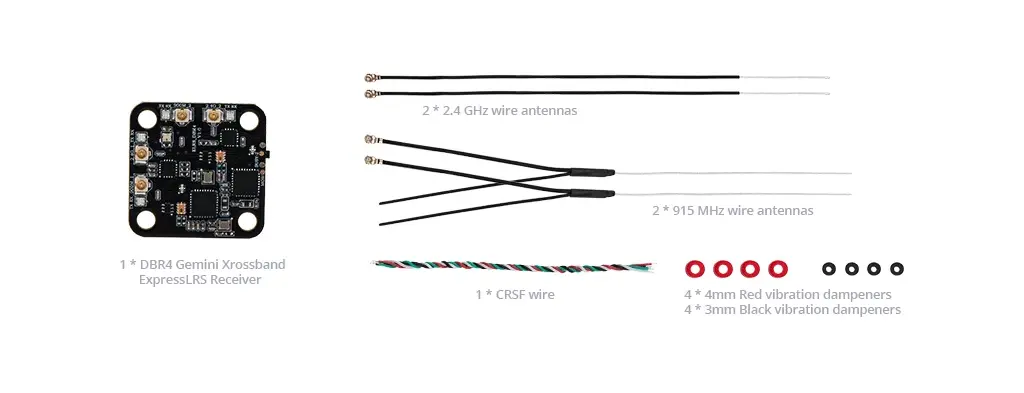
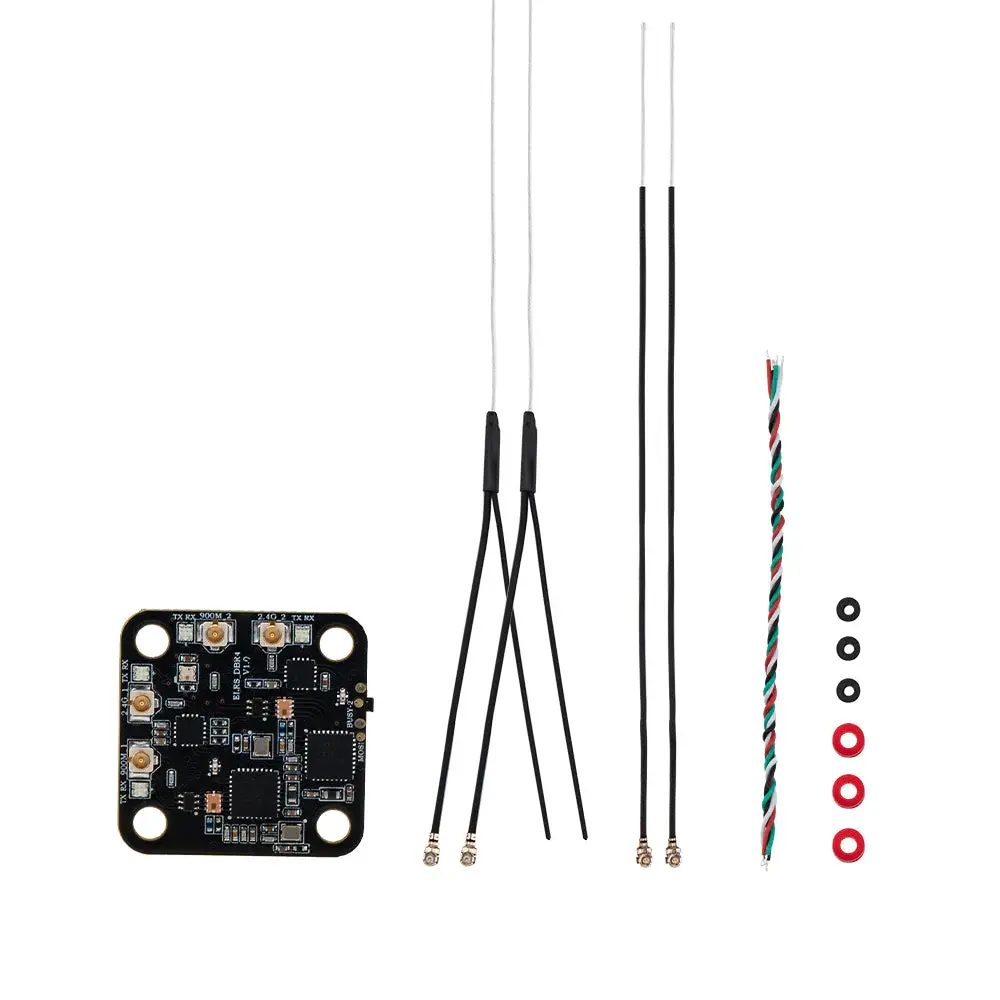
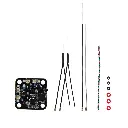
- 1x RadioMaster DBR4 Dual Band Xross Gemini ExpressLRS Receiver
- 2x 2.4 GHz Wire Antennas
- 2x 900 MHz Wire Antennas
- 1x CRSF Wire
- 4x 4 mm Red Vibration Dampeners
- 4x 3 mm Black Vibration Dampeners
- 1x Manual Card