In Poland, up to 20,000 people are reported missing every year. Most of them are children under 18, including teenagers aged 14–17. A year-on-year increase in missing persons over the age of 20 can also be observed.
What problems do BZB UAS customers face?
Searching for missing persons is time-consuming. It requires both people and money. Search and rescue services often have to deal with hard-to-reach places such as water bodies, forests, mountain areas or caves. They need qualified rescuers and specialist equipment. The costs of search operations depend on many factors and have been rising in recent years. Advanced technologies such as drones are increasingly taking part in search operations.
What problems do drones solve in search and rescue?
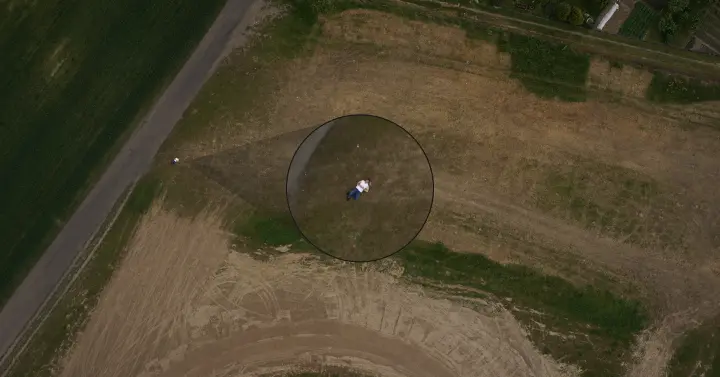
Unmanned aircraft are used mainly in rescue operations after natural disasters such as hurricanes or earthquakes. Thanks to their built-in software they can help inspect the technical condition of buildings damaged by the elements. They can also determine whether there are survivors in such a building. Recently, however, drones have increasingly been used in the search for missing persons. Because they can produce images of the terrain in real time, they work well for locating people in the field. A drone is useful in the most difficult search operations, after an avalanche or a road accident, and in operations carried out in the dark. Software is used to detect movement or a human body in visible light, as well as with infrared or thermal cameras. Drones are not only used to find the missing person – they also provide constant contact between the casualty and the rescuers (if other communication systems cannot be used). In hard-to-reach places they can also deliver food and medicine. In addition, with an unmanned aircraft it is possible to determine whether the person has had a fatal accident, which is especially important in areas that pose a threat to the health and lives of rescuers.
When unmanned aircraft are used in search operations, three types of operations can be distinguished:
- Sequential operations, in which the mission commander draws up the search plan together with the drone operator and the sensor operator, who is responsible for processing the information collected during the drone flight. If a trace of the missing person is found in the images, a ground search team goes to the site and verifies the data from the drone. This search method is particularly useful in hard-to-reach places, when the rescue team's ability to move is limited, and when search resources (people, equipment and money) are limited.
- Remotely directed operations – in this case the mission commander accompanies the ground team during the ground search, while the drone operator flies over the area currently being searched. The camera mounted on the drone is operated by the sensor operator so that it captures images reaching further than the rescuers can see. This cooperation helps manage the ground search more effectively.
- Base-directed operations – the search commander, the drone operator and the sensor operator are at the operations base. Only when the sensor operator picks up a signal indicating that the missing person is in a specific area does the drone operator go to the given coordinates and fly a survey. The search team stays near the operation so that it can go to the site at any moment and verify the signal from the drone. Operations of this type provide high mobility and are especially important when there is not enough information about where the missing person might be.
What are the benefits of using drones for search and rescue?
The life of a missing person is priceless. Unfortunately, time is not on the side of search and rescue operations, because with every hour the probability of finding the missing person decreases. Drones for rescue services are a solution that can speed up the search. It works perfectly when crew resources are limited or the exact location of the person is unknown. The images make it possible not only to assess the casualty's condition but also to prepare the rescuers for the mission so that their lives and health are at as little risk as possible. This type of solution often also increases the missing person's chance of survival, because food or medicine can be delivered to them.
BZB UAS and the use of drones in rescue
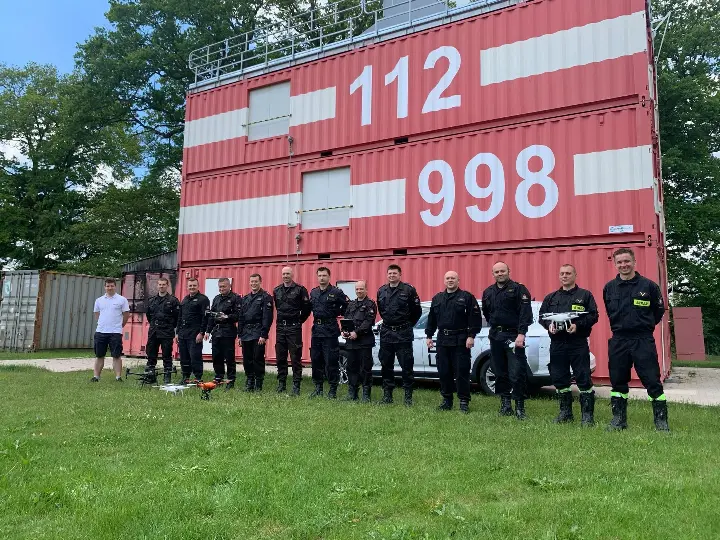
The first customer for whom we deployed unmanned aircraft for search and rescue was the Jarogniewice Volunteer Fire Brigade (OSP Jarogniewice). The volunteers have been using drones for SAR operations since 2017. We have the pleasure of running field training for them, with search and rescue scenarios involving unmanned aircraft and search and rescue dogs, as well as refresher sessions on piloting and new drone regulations. Since 2020 BZB UAS has also been working with the Provincial and Municipal Headquarters of the State Fire Service in Wrocław.
Want to know more about using drones in rescue? Contact us!