One of the main uses of medium-voltage lines is powering the overhead traction lines of Polish railways. In 2019 the total length of operational railway lines in Poland was 19,503 km, 155 km more than a year earlier. Most of them are managed by PKP PLK. The Silesian Voivodeship has the highest density of railway lines per 100 km² and the largest share of the railway network.
People have been travelling by rail across Poland for almost 200 years. In the Kingdom of Poland, then dependent on Russia, the first connection opened in 1845 – a section of the Warsaw–Vienna Railway.
Today the railway lines managed by PKP (Polish State Railways – a public company founded on 24 September 1926) are more than 20,000 km long, and Poland ranks third in the EU by railway length (just behind Germany and France). The total length of railway lines is about 201,000 km in Europe and about 290,000 km in the United States.
Over more than 90 years, rail travel has changed significantly.
What problems do BZB UAS customers face?
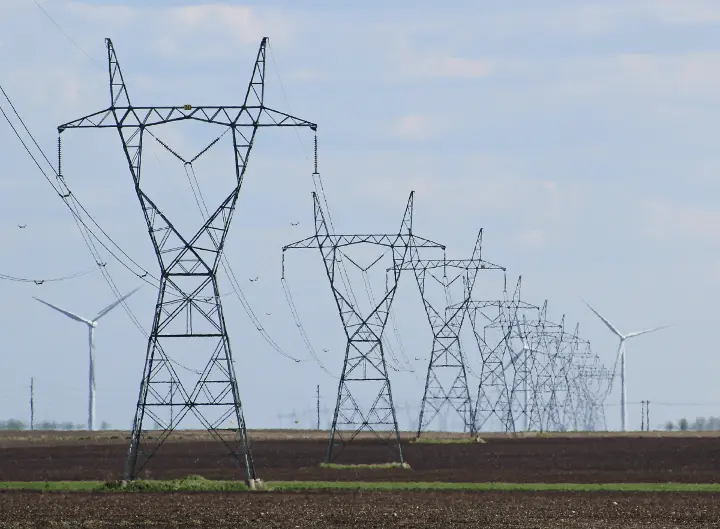
Power lines are exposed to strong weather effects such as wind, rain, snow and temperature changes. These cause atmospheric corrosion of the metals that pylons are made of. Insulators deserve special attention: they hold the weight and shape of the structure by fixing the conductors to the pylons that form its base. They must withstand the tension of the conductors as well as extreme weather. They should be made of non-conductive and, above all, corrosion-resistant materials such as porcelain or glass. Because of their nature, they are vulnerable to mechanical damage. Another danger is overly dense vegetation around high- and medium-voltage pylons. It can cause the live conductors to break, or to crack in winter. All these events can lead to power outages. They disrupt everyday life and the economy, which depend to a large extent on rail transport.
What problems do monitoring drones solve?
During the surveys the drone transmits images in real time. This ensures fast detection of irregularities and an equally fast response. Based on the data collected by the drone , artificial intelligence detects and identifies objects and people. Drones with a thermal camera flying at night can detect intruders and prevent theft or vandalism. They can also be used to inspect the technical condition of viaducts and bridges, which are often hard for people to reach and whose inspection requires a lot of people and money. Unmanned aircraft also make it possible to detect trees at risk of falling. This helps avoid damage to rails or power lines. An orthophoto map is a metric image of the terrain created by projecting aerial photos taken during drone surveys. These high-resolution images clearly show the progress of investment or maintenance work. They let you look at the whole area from a wider perspective, which makes potential threats easier to spot.
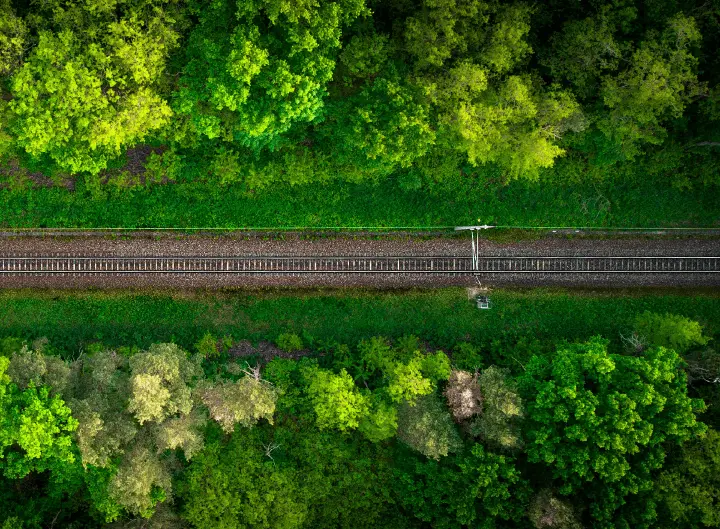
It is estimated that in 2019 the value of drone use in the railway market reached almost 4 billion dollars. Countries such as France, Spain, the Netherlands, Norway, Germany and the United Kingdom have seen the benefits of introducing advanced technologies to railway monitoring. In Norway unmanned aircraft are actively used for minor maintenance work on the tracks. In the United Kingdom they are used to help the services identify and prevent suicide attempts.
What are the benefits of using drones for monitoring?
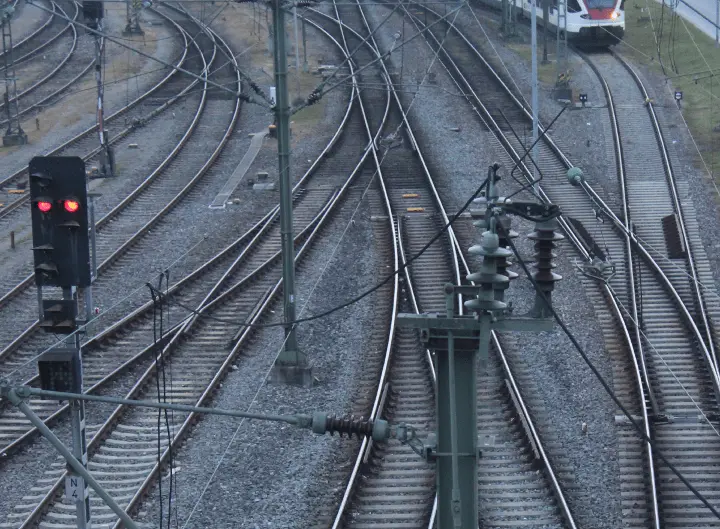
Introducing drones drone to the railway and energy industries ensures a quick reaction and an even quicker intervention thanks to real-time video from the drone. Automating the monitoring process makes it possible to reduce and optimise spending. Operational problems related to interventions or inspections in places with limited human access are reduced. Using suitably programmed algorithms, artificial intelligence can itself detect vegetation that poses a potential threat to railway or power lines.
As you can see, drones can solve many of the existing problems faced by railway workers. They bring benefits in many areas, saving both money and time. They also increase safety and help prevent troublesome theft. It is a modern solution that will probably be used on a wider scale in the coming years.
Sources:
AF. (2020). We are travelling by train more and more. There were 335.4 million passengers in 2019 (in Polish).
Retrieved from the Forbes website: https://www.forbes.pl/transport-i-logistyka/liczba-pasazerow-pociagow-w-polsce-dane-za-2019-rok/xwben23
Lesiak, P. (2020). Inspection and maintenance of railway infrastructure using drones (in Polish). Problemy Kolejnictwa. Railway Report., pp. 31–43.
European Union. (2020). Mobility and Transport. Rail Market Monitoring (RMMS).
Retrieved from the European Union website: https://ec.europa.eu/transport/modes/rail/market/market_monitoring_pl
Office of Rail Transport (UTK). (2019). Report on the functioning of the rail transport market (in Polish). Warsaw: Office of Rail Transport.